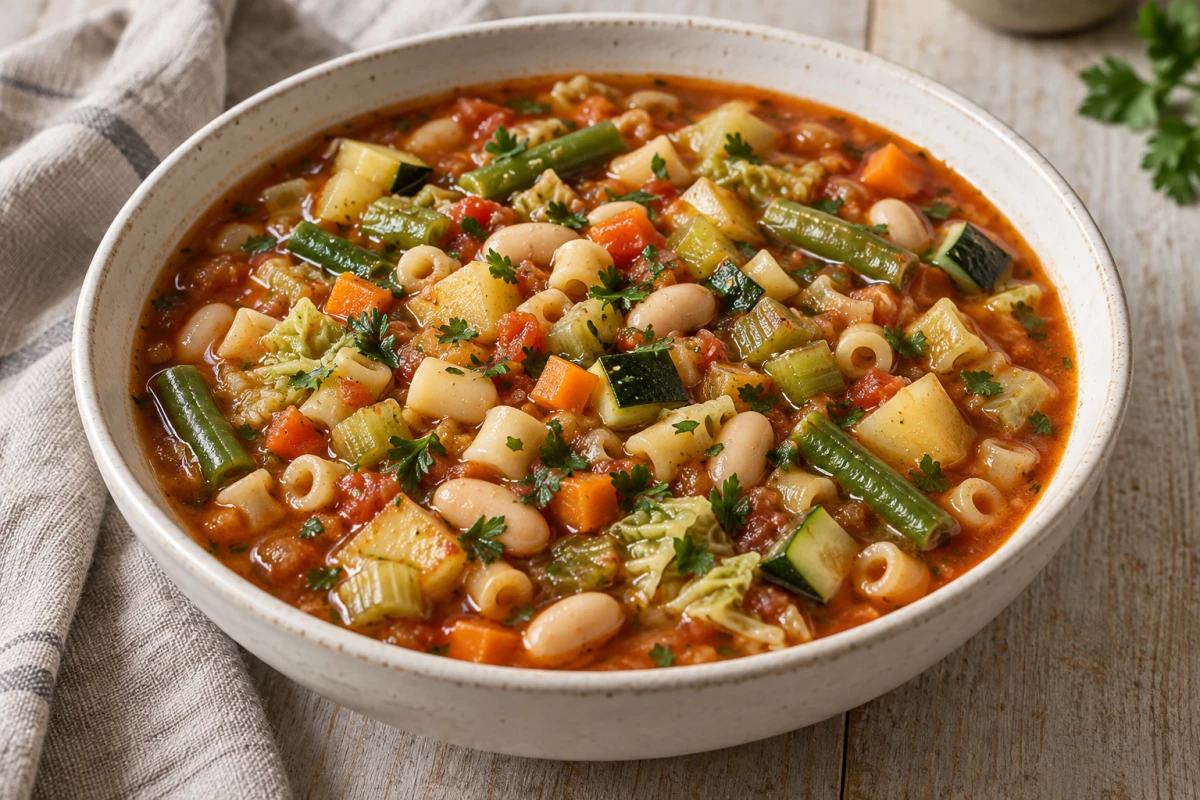
Italian Minestrone with Beans and Vegetables
Rich tomato broth, tender vegetables, and small pasta from one pot
This Italian-inspired minestrone combines a gently sweated soffritto with tomatoes, potatoes, cannellini beans, green beans, courgette, Savoy cabbage, and small pasta. Staggering the additions keeps the potatoes tender, the pasta al dente, and the green vegetables clearly defined. The vegan main course makes four generous bowls.
- Prep time
- 25 minutes
- Cook time
- 40 minutes
- Total
- 1 hr 5 min
- Yield
- 4 generous main-course bowls, about 550 ml each
Ingredients
- 20 ml extra-virgin olive oil, divided
- 150 g yellow onion, cut into 8 mm dice
- 120 g carrots, peeled and cut into 8 mm dice
- 100 g celery stalks, trimmed and cut into 8 mm dice
- 10 g garlic, finely chopped
- 40 g tomato purée
- 400 g canned chopped tomatoes with their juice
- 750 ml hot vegan low-sodium vegetable stock
- 250 g waxy potatoes, peeled and cut into 1.5 cm dice
- 1 bay leaf
- 1 g dried oregano
- 4 g fine salt, divided
- 1 g freshly ground black pepper
- 100 g small egg-free durum-wheat pasta with a 10–12 minute package cooking time, such as ditalini
- 150 g green beans, trimmed and cut into 3 cm lengths
- 180 g courgette, cut into 1.5 cm dice
- 120 g Savoy cabbage, hard core removed and cut into 1 cm ribbons
- 240 g drained canned cannellini beans, rinsed and drained
- 15 g flat-leaf parsley, leaves and tender stems finely chopped, divided
Instructions
- Wash all vegetables and cut them as specified. Rinse the cannellini beans thoroughly in a sieve and drain. Weigh the pasta and set out a heavy pot with a capacity of at least 5 litres.
- Heat 15 ml olive oil in the pot over medium heat. Add the onion, carrots, celery, and 2 g salt, then sweat for 8 minutes, stirring occasionally, until the vegetables begin to soften but take on very little colour. Heat the vegetable stock in a separate pan or kettle at the same time.
- Stir in the garlic, tomato purée, oregano, and pepper and cook for 2 minutes, stirring continuously, until the tomato purée turns brick red and smells aromatic without catching on the base.
- Pour in the chopped tomatoes with their juice and the hot vegetable stock. Add the diced potatoes and bay leaf, scrape the base thoroughly, and bring to a simmer over high heat in about 5 minutes.
- Reduce to medium-low and simmer gently, uncovered, for 8 minutes. The liquid should bubble calmly; vigorous boiling would make the potato exteriors disintegrate.
- Stir in the pasta and green beans and simmer gently for 5 minutes. Stir across the entire base after the first and fourth minutes so the pasta does not stick.
- Add the courgette, Savoy cabbage, and cannellini beans. Simmer gently for another 5–7 minutes, stirring carefully twice. The minestrone is ready when the pasta is al dente, the potatoes and green beans are tender when pierced, and the courgette dice still hold their shape.
- Remove the bay leaf. Stir in half the chopped parsley, the remaining 2 g salt, and 5 ml olive oil. Taste: the broth should be tomato-rich, herbal, and evenly seasoned without masking the individual vegetables.
- Immediately divide the minestrone evenly among four warmed bowls of about 550 ml each. Scatter with the remaining parsley and make sure every bowl receives an even share of beans, pasta, and vegetables.
- Serve hot. Bread, cheese, pesto, and any other sides are not part of the base recipe and are excluded from its allergen, dietary, and nutrition declarations.
Tips
- Consistent small dice matter more than decorative perfection: 8 mm for the soffritto and 1.5 cm for the potatoes and courgette allow everything to cook within the stated window.
- Sweat the onion, carrot, and celery gently. They should become sweet and soft; strong browning makes the clean tomato-vegetable base bitter and heavy.
- Cook the tomato purée for two minutes before adding liquid. This removes its raw taste and develops depth without extra fat or sugar.
- Small pasta releases starch directly into the soup and thickens the broth. Keep it at a gentle simmer, stir deliberately across the base, and do not leave it unattended once added.
- Serve the minestrone as soon as it is cooked. The pasta absorbs broth as it stands; add 50–100 ml water per portion when reheating leftovers.
Common mistakes
- Cutting the vegetables into very different sizes → standardise the soffritto at 8 mm, potatoes and courgette at 1.5 cm, and green beans at 3 cm.
- Browning the soffritto deeply → use medium heat and sweat only until soft and lightly translucent.
- Simply dissolving the tomato purée in liquid → cook it for the full 2 minutes before deglazing.
- Adding the pasta, courgette, and cabbage with the potatoes → follow the staggered sequence or the pasta and green vegetables will soften before the potatoes are ready.
- Boiling hard or failing to stir after adding pasta → simmer gently and sweep across the base as directed so the pasta neither breaks nor sticks.
Variations and substitutions
- Gluten-free: use 100 g certified gluten-free small pasta with a 10–12 minute package cooking time and choose explicitly gluten-free vegetable stock; stagger the pasta according to its package directions.
- Borlotti beans: replace the cannellini beans 1:1 with 240 g rinsed and drained canned borlotti beans; the colour and flavour deepen while the cooking sequence remains unchanged.
- Kale instead of Savoy cabbage: use 100 g destemmed kale cut into 1 cm ribbons and add it with the pasta and green beans in step 6 because the leaves are firmer.
- Squash instead of courgette: use 180 g peeled Hokkaido or butternut squash cut into 1.5 cm dice and add it with the potatoes in step 4 to allow enough cooking time.
- Without pasta: omit the pasta, add an extra 240 g rinsed and drained cannellini beans in step 7, and reduce the stock by 150 ml. Yield, texture, and nutrition will change.
Storage and notes
Storage
Do not leave minestrone at room temperature for more than 2 hours; transfer leftovers to shallow containers for rapid cooling. Store airtight at no more than 5°C for up to 3 days. The pasta continues to absorb liquid, so add 50–100 ml water per portion and reheat once, stirring, until the soup reaches at least 74°C throughout. Eat reheated leftovers immediately and do not chill them again. Finished minestrone can be frozen airtight for up to 2 months, although the pasta and potatoes soften after thawing; thaw overnight in the refrigerator and reheat as directed.
Allergens
Contains celery and wheat/gluten. Depending on the products, vegetable stock and pasta may additionally carry mustard, soy, egg, other allergens, or precautionary statements; use explicitly egg-free pasta and vegan stock for the vegan base recipe and check every label. Dairy-free and nut-free claims apply only with suitably labelled products and controlled avoidance of cross-contact. The gluten-free variation requires certified gluten-free pasta and stock plus clean equipment and work surfaces.
Food safety
- Wash the vegetables and parsley thoroughly under running potable water; remove damaged areas and cut on a stable board using safe knife technique.
- Do not use cans that are swollen, leaking, deeply dented, or rusted. Once opened, drain and rinse the beans in a sieve and do not store them in the opened can.
- Keep clear of hot steam and splashes while adding liquid or stirring, turn pot handles inward, and avoid moving the heavy filled pot unnecessarily.
- Chill leftovers to no more than 5°C within 2 hours and reheat only once, reaching at least 74°C throughout.
Editorial context
This presentation and its supporting notes were edited for Rezepte daheim. It does not claim invention of the dish.
No personal kitchen test is currently documented for this version.